All Categories
Featured
Table of Contents
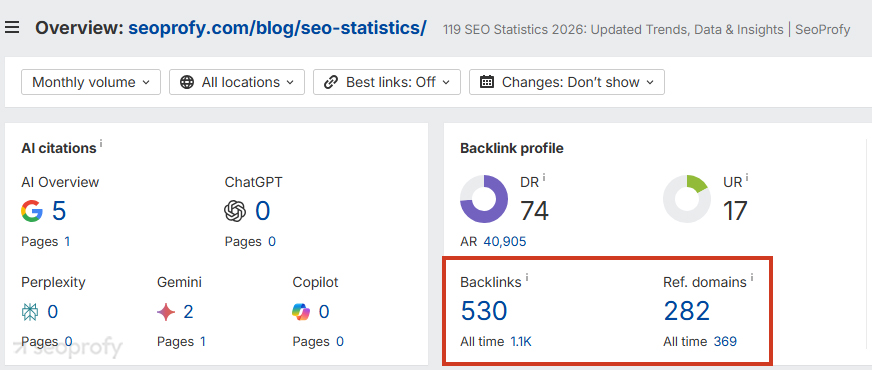
The 2026 Standard for Authority and Trust

The search environment in 2026 has transitioned far from simple mathematical metrics toward a model defined by verifiable proficiency and entity relationships. In previous years, a link was frequently deemed a mere vote of self-confidence. Now, search algorithms deal with a backlink as a data-rich bridge in between 2 recognized entities. If a link does not carry the weight of a validated author or a recognized topical leader, its impact on rankings is minimal. This modification reflects a more comprehensive motion by search engines to focus on human-verified content over the massive influx of automated text that flooded the web over the last two years.
Establishing a profile that endures existing algorithmic scrutiny needs a concentrate on what is now called "contextual perseverance." Links that appear in short-lived or low-traffic environments are marked down nearly instantly. Instead, the focus has actually shifted to deep-site integration where a citation lives within the core material of a high-traffic resource. Success in the existing market involves focusing on Backlink Velocity over simple volume. When a domain receives a citation from a source that online search engine already trust as a main authority, the resulting increase in visibility is even more substantial than what was seen in the past.
Online search engine now utilize "Neural-Semantic Link Charts" to determine the credibility of a backlink. These charts look beyond the anchor text to evaluate the surrounding paragraphs, the history of the connecting domain, and the specific proficiency of the individuals contributing to that website. If a link originates from a page that lacks a clear expert-identity signal, it might be flagged as low-value no matter the site's total domain score. This makes the selection of partners and sources a matter of intense scrutiny for anybody managing a digital existence in 2026.
The Shift Toward Semantic Importance and Entity Linking
The idea of "domain authority" has been replaced by "topical sovereignty." A site no longer has a single authority rating that applies to every page. Instead, a website may be a high-authority source for financial recommendations however a low-authority source for technical hardware. Hyperlinks are weighted based upon this topical overlap. A link from a prominent medical journal to a health-tech startup brings tremendous weight, whereas a link from the very same journal to a genuine estate company offers little to no advantage in 2026. This topical clustering guarantees that search results page stay pertinent and challenging to control through old-school link acquisition approaches.
Data from the early part of 2026 recommends that search engines are also taking a look at the "age of the relationship" in between entities. Frequent, natural mentions in between two associated organizations over numerous months develop a stronger signal than a one-off placement. This has caused a rise in long-term content partnerships where professionals work together on research study documents, whitepapers, and interactive datasets. Utilizing high-level content syndication has actually ended up being a standard method for ensuring that these relationships are recorded and acknowledged by search crawlers.
Natural Backlink Velocity Strategies now needs an advanced approach to data attribution. It is no longer sufficient to merely be mentioned. The reference should be connected to a particular claim, figure, or special insight that the target website provides. Online search engine have ended up being adept at determining "empty links" that serve no function other than SEO. These are now ignored or, in many cases, lead to a suppression of the page's capability to pass equity. The focus is entirely on utility. Does the link help the user find more in-depth details that is not currently present on the page? If the answer is no, the link provides no worth to the profile.
The Role of Specialist Identity in Link Equity
Among the most considerable developments in 2026 is the integration of verified identity into the link chart. Search engines now cross-reference the authors of connecting posts with professional databases, social profiles, and historic contributions. A short article composed by a known specialist in a field passes considerably more "trust juice" than a confidential post or one produced by a basic AI design without human oversight. This has made the procurement of citations from acknowledged market leaders the most in-demand goal in any link-building strategy.
Developing a footprint through Quality Outreach across Diverse Sectors produces the needed trust signals for long-term presence. When a professional links to a resource, they are basically staking their expert credibility on the quality of that info. The algorithms of 2026 are created to spot this professional danger and reward it. This is why numerous organizations have actually moved away from generic outreach and toward constructing authentic relationships with the individuals who specify their markets. The human aspect of the web has actually become the ultimate filter for quality.
Preserving Efficiency in a Post-Bot Environment
The large volume of material produced in 2026 makes it impossible for manual review to govern the entire web. However, search engines have executed "link-integrity filters" that operate at the crawl level. These filters analyze the velocity and pattern of brand-new links. If a site unexpectedly acquires numerous relate to comparable anchor patterns, the system instantly separates those links till they can be validated through secondary signals like user traffic or social engagement. This avoids the "burst" tactics that prevailed a few years earlier from supplying any sustainable advantage.
Longevity is another crucial aspect. In the search landscape of 2026, the value of a link really increases the longer it stays active and clicked. If a link exists but never ever receives interaction, online search engine conclude that it is either irrelevant or improperly placed. This has moved the focus from "getting a link" to "placing a resource." The goal is to be the go-to referral that people actually require to click on to understand a complex topic. This is where strategic asset development ends up being a needed part of the process, as it concentrates on developing the types of pages that naturally attract and keep attention.
Technical health likewise affects how a link profile is valued. If a site is slow, has bad mobile UX, or consists of damaged scripts, the equity passed from its outbound links is decreased. Online search engine do not wish to send users or authority through a "leaky" pipe. Keeping a high-authority profile likewise indicates preserving the technical excellence of the pages where those links live. This holistic view of the web means that SEO can no longer be siloed into "on-page" and "off-page" classifications; whatever is adjoined.
The Future-Proof Link Profile
Looking towards the end of 2026, the most resistant profiles are those that show a "natural variety" of source types. This does not mean a random selection of low-quality links. Rather, it indicates a mix of editorial discusses, citations in academic papers, references in government datasets, and discussions on high-trust social platforms. A profile that depends on only one kind of link is susceptible to the next algorithmic upgrade. Diversity serves as a hedge versus the moving top priorities of search engines.
Another emerging pattern is the "temporal significance" of links. Search engines are beginning to give more weight to links that are upgraded and preserved. If a post from 2 years earlier is still being mentioned and its outbound links are still accurate and relevant, those links get a "seniority benefit." This motivates content creators to keep their details fresh and their citations present. Static, forgotten material is gradually being pressed to the periphery of the index, making room for "living" files that progress along with their subject.
The dependence on verified citation building will likely increase as online search engine get better at detecting the difference in between a synthetic relationship and a genuine one. The systems are now searching for "co-citation" patterns. If Site A and Site B are often pointed out together in the same breath as a particular topic, they end up being linked in the entity graph even without a direct hyperlink between them. This "implied link" is ending up being a powerful signal in 2026, though it still requires the structure of a strong, traditional backlink profile to be completely recognized.
Strategic Integration of Content and Authority
Building a high-authority profile is no longer a task that can be automated or outsourced to low-level service providers. It needs a deep understanding of the market and a dedication to producing high-value assets. The most effective organizations in 2026 are those that treat their link profile as a reflection of their brand's real-world authority. They focus on being the source of news, the service provider of information, and the voice of know-how. When these elements are in location, the links follow naturally, and the profile becomes a formidable barrier to entry for rivals.
The 2026 search environment rewards those who contribute to the web rather than those who simply try to extract value from it. By focusing on utility, validated identity, and topical sovereignty, a site can construct a backlink profile that not just ranks well however likewise builds genuine trust with its audience. This trust is the most important currency in an age of automated sound. Those who comprehend this shift will find themselves at the top of the search results, while those who cling to the tactics of the past will discover their visibility slowly deteriorating in a progressively advanced digital world.
Securing a place in the future of search requires a proactive stance. Keeping an eye on the health of an existing profile, cleaning up out-of-date or unimportant citations, and continuously seeking new ways to supply value are the trademarks of a modern-day method. The tools and algorithms will continue to change, however the essential concept of the 2026 search engine remains the same: authority needs to be made through consistent, proven excellence.

Latest Posts
Strategic Link Building in Today's SEO Landscape
2026 Outreach Trends for Maximum ROI
Proven Strategies for Maximum DA Link Success